
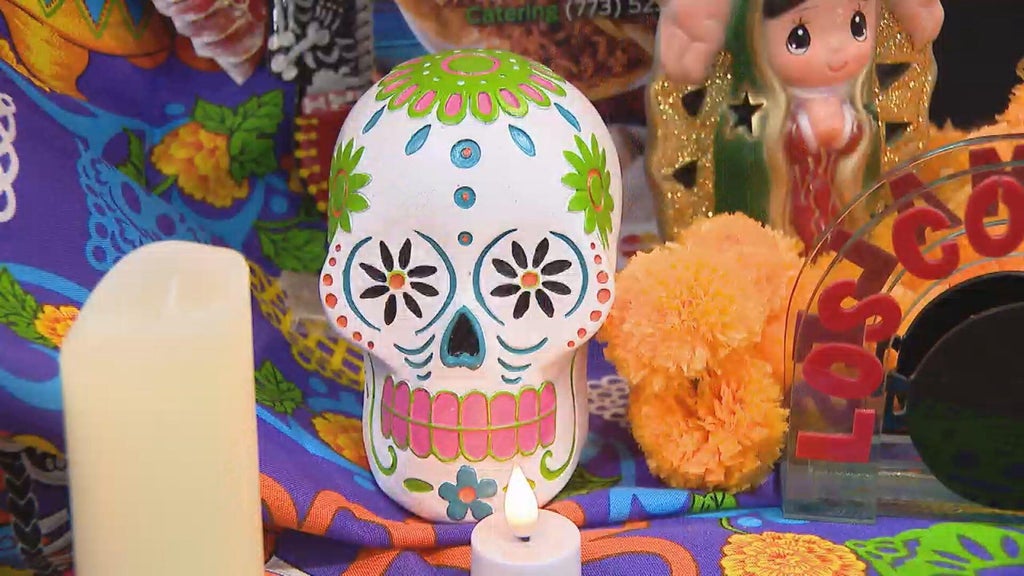
While many across the Chicago area get ready for Halloween on Saturday, some families also are preparing to observe Día de Los Muertos, or Day of the Dead, a Mexican holiday honoring lost loved ones, traditionally celebrated on Nov. 1 and 2.
Christina Gonzalez is the second-generation co-owner of Los Comales. She has set up an ofrenda – or altar – inside the restaurant in Little Village to celebrate Día de los Muertos and honor her father, Camerino Gonzalez, who started Los Comales in 1973.
"For me, it's not just the traditions of memory keeping and remembering the loved ones, it's also bringing together your two cultures of being born here, but also having those rich beautiful traditions and cultures that we have from Mexico from our parents," Christina said.
Los Comales is one of several locations participating in Xempasúchil, a two-day event where businesses highlight Día de los Muertos with holiday celebrations and promotions.
"We're welcoming our city in and saying, 'Come, don't just tour here, become a part of it,'" Christina said.
The Little Village chamber of commerce organized the Xempasúchil event as part of ongoing efforts to help the neighborhood's 26th Street business corridor recover from economic struggles of the pandemic and stepped up immigration enforcement.
"This is a way to uplift them. So what better way to support local and celebrate our culture?" said Alfredo Palafox, outreach and membership specialist with the Little Village Chamber of Commerce.
Another major part of Día de los Muertos is the tradition of sharing pan de muerto, a traditional Mexican sweet bread baked for Día de los Muertos. Panaderia Nuevo Leon in Pilsen has been churning them out for decades.
"It's either the muñeco, which looks like a little person, or the hojaldra, which is supposed to look like the top of the skull and then the bones on top," said Xiomara Casas, the granddaughter of the bakery's owner.
Casas said demand is high for the sweet bread that is placed on ofrendas to honor the dead as well as be enjoyed by the living.
The bakery has been around for more than five decades, and Casas said helping the community keep the tradition brings joy.
"A lot of our customers, they would tell us, 'My grandmother used to bring me in, now I'm bringing my kids in,' and they stack their trays with pan de muerto. So, it's very nice to see that the tradition is still living on," Casas said.


